
Pag-aalaga ng itik
Itik (egg duck) cost & profit calculator
Raising ducks for eggs, balut or itlog na maalat? See how many eggs your flock should give, what the ducks, feed and care will cost, your cost per egg, which way of selling pays best at your prices, and the profit per duck and per month.
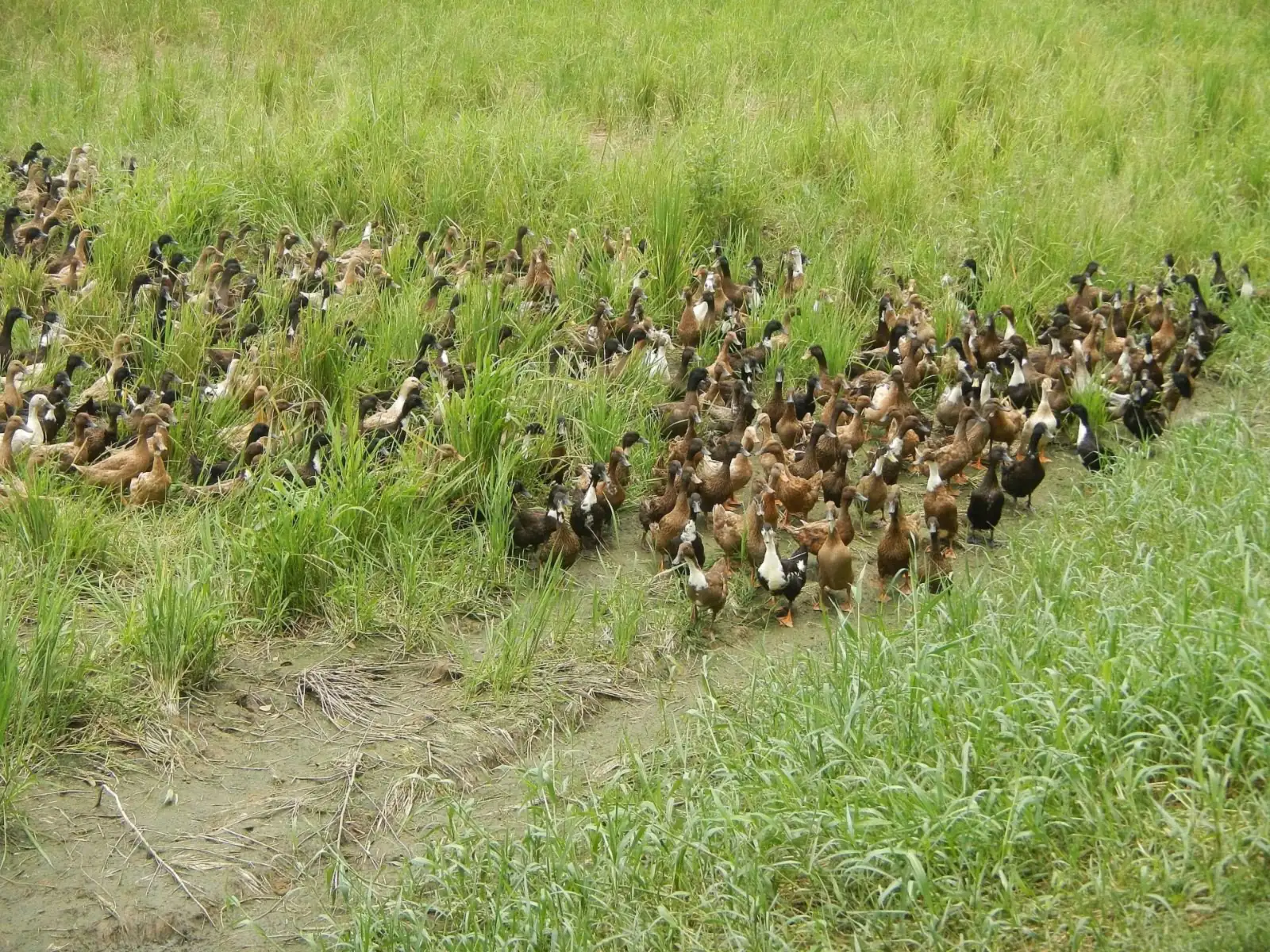
Duck farming in Candaba, Pampanga. Photo: Judgefloro, CC BY-SA 4.0, via Wikimedia Commons

Your estimate for the laying period
No drakes means no fertile eggs: the eggs you set for balut can only become penoy. Add drakes, or set 0% for balut.
What one egg brings at your prices
- Fresh₱9.00per egg
- Balut / penoy₱17.75per egg set, after incubating
- Salted₱12.50per egg, after salting
Best at these prices: balut (and penoy). Check you have buyers for that many before you change your mix.
One day at the start of lay
- Eggs350
- Feed82.5 kg · ₱2,475
- Ducks to each drake10.0
- Eggs laid
- 124,215 in 364 days
- Good eggs
- 120,489
- Sold fresh
- 36,147 · ₱325,319
- Balut
- 51,208 · ₱1,024,153
- Penoy
- 9,037 · ₱135,550
- Salted eggs
- 24,098 · ₱337,368
- Birds at the end
- 523 of 550
- Feed for the period
- 29.28 t · 586 bags of 50 kg
- Ducks and drakes
- ₱192,500
- Feed
- ₱878,378
- Health and other costs
- ₱107,195
- Incubating and salting
- ₱126,513
- Total cost
- ₱1,304,585
- Egg, balut and penoy sales
- ₱1,822,389
- Culls sold
- ₱104,500
- Income
- ₱1,926,889
- Average you get per egg
- ₱14.07
- Profit per duck placed
- ₱1,245
- Return on cost
- 47.7%
What if things change?
| Eggs sold as | Profit |
|---|---|
| Your mix (30/50/20) | ₱622,304 |
| All fresh | ₱10,825 |
| All balut and penoy | ₱1,065,100 |
| All salted | ₱432,535 |
| Lay rate | Profit |
|---|---|
| 60.0% −10 pts | ₱380,036 |
| 65.0% −5 pts | ₱501,170 |
| 70.0% (yours) | ₱622,304 |
| 75.0% +5 pts | ₱743,438 |
How we work it out
- Birds and days: weeks of lay × 7 = days. Birds lost are spread evenly over the period, so the flock averages ducks and drakes × (1 − half the % lost).
- Eggs: average ducks × days × lay rate = eggs laid; take off the cracked or rejected eggs. Your balut and salted shares come out of the good eggs, the rest are sold fresh. Of the eggs set, your balut yield become balut and the rest penoy (with no drakes, all of them are penoy).
- Costs: ducks and drakes × price + feed (average birds × days × grams a day × your feed price) + health per bird + other costs per bird each month + incubating cost per egg set + salting cost per salted egg.
- Profit: fresh, balut, penoy and salted egg sales + culls, minus the total cost. Cost to produce an egg = (total cost − incubating and salting − cull sales) ÷ good eggs.
An estimate only, made from the numbers you type: real lay rates rise to a peak and then slowly fall, and feed use, losses, balut yield and prices vary with the breed, feed, foraging, weather and disease. Use your average lay rate for the whole period, not the peak. The cost of raising ducklings yourself, the duck house, pond, fencing and incubator is not counted unless you add it under other costs. Check figures with your feed supplier, veterinarian or municipal agriculture office before you invest. Nothing you type is stored or sent anywhere. Keeping chickens for eggs? Use the egg layer calculator.
Healthy ducks, steady eggs
Ducks are hardy, but a flock that roams rice fields and waterways meets other birds every day. These everyday habits protect your ducks and your neighbors' flocks - bayanihan starts at the duck pen gate.
- Choose laying stock. Egg-type ducks lay far more than meat ducks. The Department of Agriculture’s Bureau of Animal Industry has bred egg-type Philippine mallard strains (Itik Pinas); ask your provincial veterinarian or agriculture office where to source good ready-to-lay ducks.
- Herd with care after harvest. Ducks gleaning harvested rice fields save feed, but keep them off fields that were just sprayed, away from other flocks and wild birds, and bring them home to a clean, dry pen at night.
- Give water to dip their heads. Ducks need drinking water deep enough to clean their eyes and nostrils, plus shade. Change it often: dirty water spreads disease.
- Collect eggs early every morning. Ducks lay mostly at night and before dawn. Clean, dry nests and early collection mean fewer dirty and cracked eggs.
- Keep the routine steady. Ducks are easily scared: sudden noise, new people, moving the flock or changing feed can drop the lay rate for weeks.
- Keep a simple record of eggs collected, feed used and birds lost each day. A sudden drop in eggs is often the first sign of trouble.
- Report many sudden deaths at once to your municipal or city veterinarian or agriculture office. Ducks can carry bird flu (avian influenza) without looking sick, and it must be reported. Do not sell sick or dead birds.
- Get ready for typhoons and floods. Low-lying duck areas flood first: plan where the flock goes when the water rises, keep feed dry and off the floor, and ask the PCIC whether your flock can be insured.
General guidance only, not veterinary advice. Official information: the Bureau of Animal Industry (BAI), the Department of Agriculture, DOST-PCAARRD (farm research and technology) and the Philippine Crop Insurance Corporation (PCIC). Find your local office in our farm help directory.
Balut, penoy and salted eggs
Turning eggs into balut or itlog na maalat can earn more per egg, but it takes extra work, equipment and care with food safety:
- Balut needs fertile eggs. Keep enough healthy drakes with the ducks and set eggs while they are fresh. Balut is usually incubated for about 16 to 18 days; eggs that do not develop are sold as penoy.
- Candle and sort. Candling the eggs during incubation shows which are developing and which are not, so each is sold for what it is. Never sell spoiled eggs (abnoy) as food.
- Steady heat matters. Whether you use an electric incubator or the traditional rice hull (ipa) method, plan for brownouts: a few cold hours can spoil a whole batch.
- Salted eggs take time. Eggs are cured in a salt and clay (or salt and soil) paste or in brine for a few weeks, then washed and boiled. A Department of Agriculture guide describes about 18 days in a soil-salt mixture; test a few eggs before a big batch.
- Food safety first. Work with clean hands, tools and water, boil thoroughly, keep cooked eggs cool and out of the sun, and use only food-safe colors for red salted eggs. Ask your city or municipal health office what permits you need to sell processed food.
- Sell together. Raisers in a barangay or cooperative can share an incubator, pool eggs for bigger orders and share transport to balut vendors and markets - bayanihan in business.
Planning the money? Ask government farm lenders such as the Landbank or the ACPC about farm loan programs; see our farm help directory.
Typhoon season?
Our free typhoon and flood farm checklist covers animals, feed, power and buildings, step by step.