
Palaisdaan
Tilapia & bangus pond cost & profit calculator
Raising tilapia or bangus in a pond? See how many kilos one cycle should give, what fingerlings, feed and upkeep will cost, your profit per cycle and per year, and the lowest price and survival that still cover your costs.
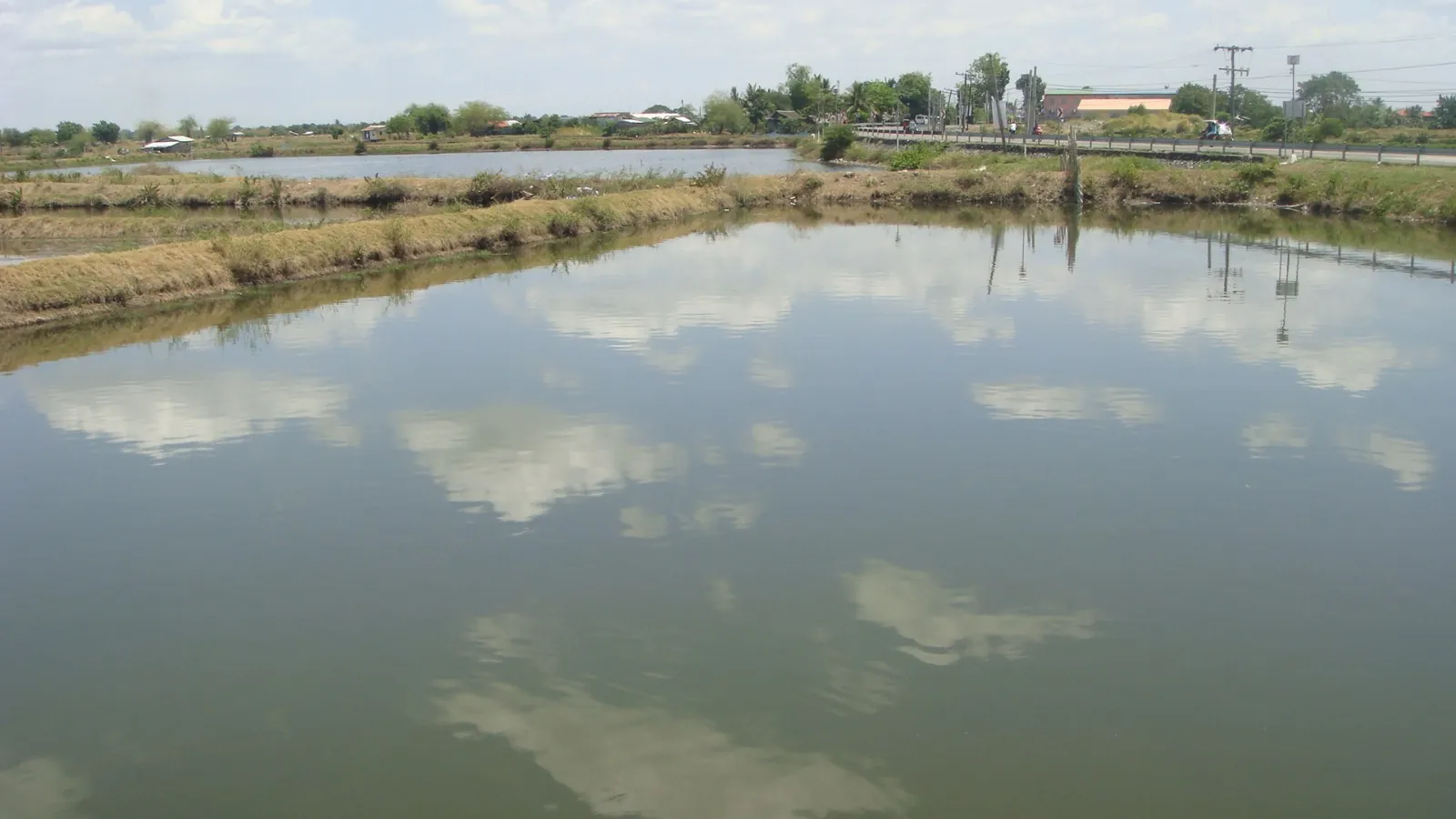
Fishponds in Nansangaan, Binmaley, Pangasinan. Photo: Ramon FVelasquez, CC BY-SA 3.0, via Wikimedia Commons

Your estimate for one cycle of tilapia
The feed for each kilo of fish (FCR × feed price) costs as much as or more than the fish sells for. Better survival will not fix that: look at the FCR, the feed price or the selling price.
That is a lot of fish per m² for this kind of pond (more than 5.0). Ponds stocked this heavily usually need aerators, good water exchange and close watching for low oxygen at dawn.
That many cycles of that length, plus about two weeks to drain, dry and prepare the pond between them, do not fit in one year.
Year by year
- A year₱23,587from 2.0 cycles
- Per m² a year₱23.59of pond water
- Pays back the setup in2.5 yearsfrom a year's profit
Your pond in one cycle
- Fish stocked3,000
- Fish harvested2,400 · 4.0 to a kilo
- Survival needed to break even52%
- Pond area
- 1,000 m²
- Yield
- 6,000 kg per hectare a cycle
- Feed for the cycle
- 780 kg · 31 bags of 25 kg
- Feed cost per kg of fish
- ₱54.60
- Fingerlings
- ₱2,400
- Feed
- ₱32,760
- Pond preparation
- ₱5,000
- Labor
- ₱7,890 · 3.9 months
- Power and fuel
- ₱3,156
- Other costs
- ₱3,000
- Cost of the cycle
- ₱54,207
- Fish sold
- ₱66,000
- Cost per kg harvested
- ₱90.34
- Profit per fish harvested
- ₱4.91
- Profit a month (over a year)
- ₱1,966
- Return on the cost of a cycle
- 21.8%
What if things change?
| Survival | Profit a cycle |
|---|---|
| 60% survive | ₱3,483 |
| 70% survive | ₱7,638 |
| 80% survive (yours) | ₱11,793 |
| 90% survive | ₱15,948 |
| Price | Profit a cycle |
|---|---|
| ₱90/kg −₱20 | −₱206.58 |
| ₱100/kg −₱10 | ₱5,793 |
| ₱110/kg (yours) | ₱11,793 |
| ₱120/kg +₱10 | ₱17,793 |
How we work it out
- Fish: pond area × fingerlings per m² = fish stocked; × survival = fish harvested; × harvest weight = kilos harvested.
- Feed: kilos harvested × FCR = kilos of feed, × your feed price. Labor, power and fuel are per month, for the days of culture.
- Profit: kilos harvested × farm-gate price − the cost of the cycle. A year = profit a cycle × cycles a year; payback = pond setup ÷ a year's profit.
- Break-even: cost of the cycle ÷ kilos harvested = the lowest price per kilo that covers your costs. Break-even survival is the survival at which the fish sold just pay for the cycle.
An estimate only, made from the numbers you type: real survival, growth, FCR and prices vary with the pond, water, weather, fingerling quality and season, and one fish kill or flood can change everything. Feed is worked out on the kilos harvested, so the small weight of the fingerlings stocked is left out. Loan interest, land rent and the value of your own time are not counted unless you add them under other costs. Check figures with your municipal agriculture or fisheries office, BFAR or an aquaculture technician before you invest. Nothing you type is stored or sent anywhere. Planning when to stock? See the typhoon months in our crop calendar and get the pond ready with the typhoon & flood checklist.
A healthy pond, a better harvest
Most losses in a fishpond come from the water, not the fish. These everyday habits protect your harvest - and your neighbors' ponds that share the same canal. Bayanihan works on the dikes too.
- Prepare the pond before every cycle. Drain it, let the bottom dry and crack, remove extra mud, fix leaks in dikes, gates and screens, then lime and fertilize so natural food (lab-lab and plankton) grows before you stock.
- Buy good fingerlings. Get them from a BFAR or reputable hatchery or nursery, of an even size. Let the bags float in the pond for a while so the water temperature evens out before you release the fish.
- Watch the oxygen at dawn. Fish gasping at the surface early in the morning means low oxygen. Stop feeding, run the aerator or let in fresh water, and call your fisheries technician. Hot, still, cloudy days and heavy algae make it worse.
- Do not overfeed. Feed you see left over rots and uses up oxygen. Feed a little at a time, at the same hours, and adjust as the fish grow. Weigh a sample of fish every couple of weeks.
- Keep records of fish stocked, feed used, sample weights, deaths and the harvest. They show your real FCR and survival and make this calculator much more accurate.
- Get ready for typhoons and floods. Raise and strengthen dikes, put nets along the top so fish do not escape when the water rises, and think about an early harvest if the fish are near size and a storm is coming. Ask the PCIC about fishery insurance.
- Mind the advisories. BFAR posts fish kill, red tide and price advisories. Check with your municipal agriculture office before buying fry or selling from an affected area.
- Know the rules. Ponds on public land need a Fishpond Lease Agreement with BFAR, and clearing mangroves for new ponds is not allowed. Ask your municipal office about permits before you dig.
General guidance only, not technical or legal advice. Official information: the Bureau of Fisheries and Aquatic Resources (BFAR), the Department of Agriculture, DOST-PCAARRD (aquaculture research and technology) and the Philippine Crop Insurance Corporation (PCIC). Find your local office in our farm help directory.
Selling your harvest
The price per kilo and the size buyers want matter as much as the kilos. A few habits help:
- Ask buyers what size they want. Markets often price by how many fish make a kilo. Agree on the size and price with your buyer or trader before you harvest.
- Plan around the busy weeks. Demand for fish is often higher during Lent and Holy Week and before fiestas and Christmas. Count back the days of culture to plan when to stock.
- Keep the fish fresh. Harvest early in the morning, chill the fish in ice right away and get them to market quickly. Some buyers pay more for live tilapia.
- Sell together. Fish farmers in a barangay, cooperative or association can pool harvests for bigger orders, share a harvest crew, ice and transport, and buy feed together - bayanihan in business.
- Check your numbers. Compare the break-even price above with what buyers offer, and use the what-if tables to see how much a better survival or price is worth.
Planning the money? Ask government farm lenders such as the Landbank or the ACPC about loan programs for fish farmers; see our farm help directory.
Typhoon season?
Our free typhoon and flood farm checklist covers ponds, animals, feed, power and buildings, step by step.