
Pag-aalaga ng kambing
Kambing (goat) raising cost & profit calculator
Keeping does to sell kids? See how many kids your herd should give in a year, what feed, forage and care will cost, your profit per doe, how long buying the herd takes to pay back, and the lowest price per kilo that still covers your costs.
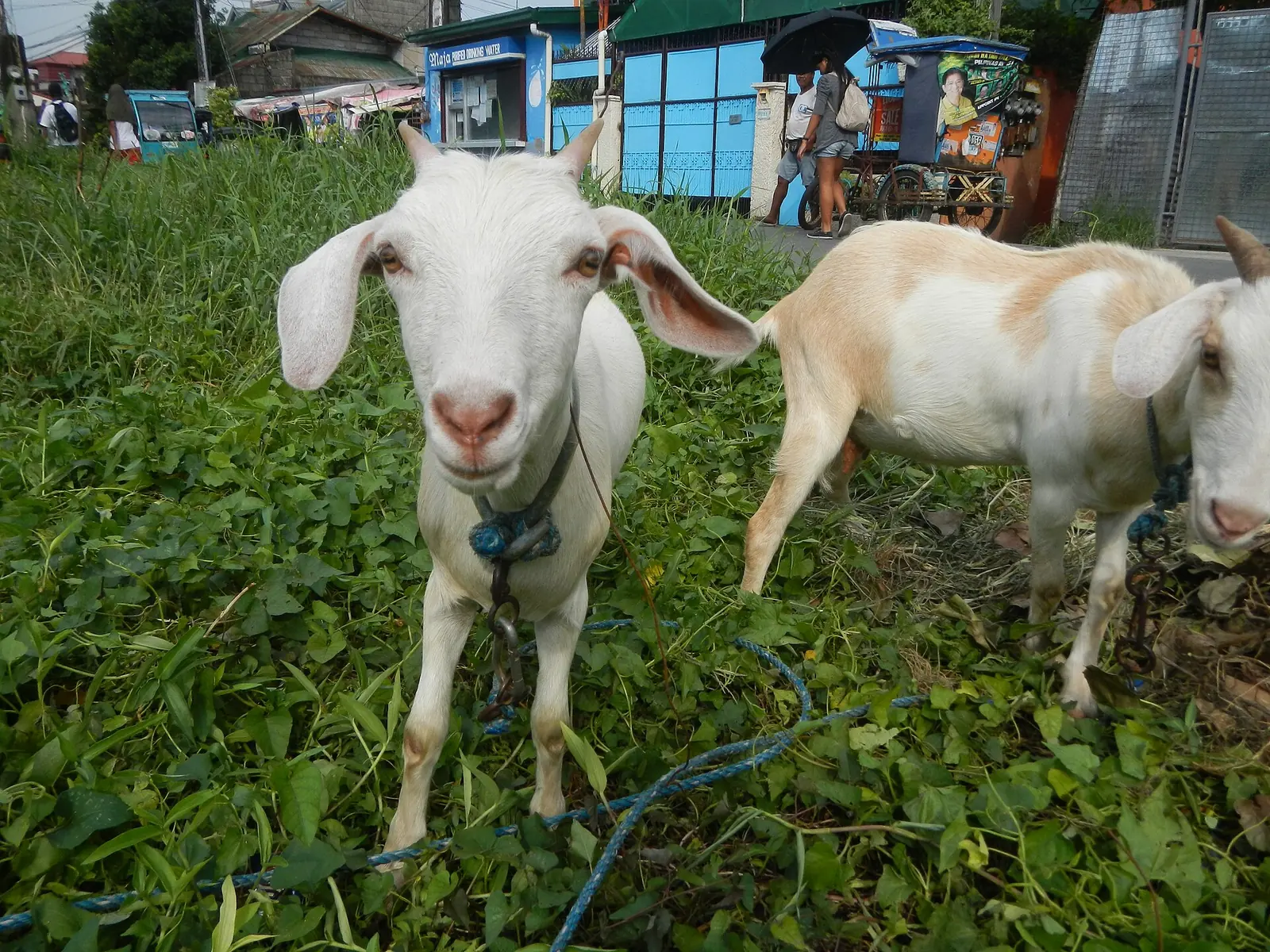
Goats by a farm road in Malolos, Bulacan. Photo: Judgefloro, Public domain, via Wikimedia Commons

Your estimate for a normal year
No buck entered: the kids here assume you use AI or borrow a buck. Add that cost under other costs.
That is more than 30 does for each buck: fewer does may get pregnant on time. Think about a second buck.
Not enough doelings to keep that many: about half the kids are female, so we kept all the doelings and sold only the males.
Year by year
- First year−₱104,354after buying the does and bucks
- Each year after₱70,646running costs only
- Pays back the herd in2.5 yearsfrom normal-year profit
Your herd in a year
- Kids born47
- Kids sold39 · about 3.2 a month
- Does to each buck20.0
- Kids weaned and raised to sale
- 43 · 2.13 per doe
- Doelings kept
- 4
- Live weight sold
- 779 kg · ₱5,000 a kid
- Does next year
- 20 (of 20 now)
- Concentrate for the year
- 3,052 kg · 61 bags of 50 kg
- Concentrate
- ₱85,466
- Forage
- ₱25,177
- Health
- ₱6,294
- Other costs
- ₱25,177
- Running cost a year
- ₱142,114
- Kids sold
- ₱194,760
- Culled does sold
- ₱18,000 · 3 head
- Income a year
- ₱212,760
- Buying the herd (first year only)
- ₱175,000
- Cost per kg live weight sold
- ₱159.32
- Profit a month
- ₱5,887
- Return on running cost
- 49.7%
What if things change?
| Kiddings | Profit a year |
|---|---|
| 1.0 a year | ₱20,173 |
| 1.2 a year | ₱40,362 |
| 1.5 a year (yours) | ₱70,646 |
| 2.0 a year | ₱121,120 |
| Price | Profit a year |
|---|---|
| ₱210/kg −₱40 | ₱39,485 |
| ₱230/kg −₱20 | ₱55,066 |
| ₱250/kg (yours) | ₱70,646 |
| ₱270/kg +₱20 | ₱86,227 |
How we work it out
- Kids: does × (1 − half the % adults lost) × kiddings a year × kids per kidding = kids born; take off the kids lost. Doelings kept (up to half the kids) are not sold; the rest are sold at your live weight and price.
- Feed: average adults × 365 days × concentrate per adult, plus kids × months to sale × concentrate per kid, × your price per kg. Forage, health and other costs are per head, with each kid counted for the months it is on the farm.
- Profit: kid sales + culled does sold − running costs = a normal year. The first year also pays for buying the does and bucks; payback = herd cost ÷ normal-year profit.
- Break-even: (running costs − culled doe sales) ÷ kg of live weight sold = the price per kilo you need just to cover your costs.
An estimate only, made from the numbers you type: real kidding rates, litter sizes, growth and prices vary with the breed, feed, forage, season and disease, and young does kid less often than mature ones. The goat house, fencing, forage plots, water system and the value of the doelings you keep are not counted unless you add them under other costs. Check figures with your agriculture office, veterinarian or a goat raisers’ association before you invest. Nothing you type is stored or sent anywhere. Already have herd records? Work out your kidding and weaning % with the kidding, calving & weaning % calculator, and plan kiddings with the due date calculator.
Healthy goats, more kids
Goats are hardy and fit small farms well, but worms, wet pens and poor feeding cost more kids than anything else. These everyday habits protect your herd and your neighbors' - bayanihan starts at the pen gate.
- Keep them dry and off the ground. Goats do badly in mud and rain. Many Filipino raisers keep them in a raised, slatted house with a roof, so droppings fall through and the floor stays dry - most important in the tag-ulan.
- Worms are the big risk. Stomach worms cause pale gums, weight loss and deaths, worst in the wet months. Ask your veterinarian about a deworming plan, rotate grazing areas and avoid letting goats graze wet, low grass early in the morning.
- Feed browse, not just grass. Goats prefer leaves: ipil-ipil, kakawate (madre de cacao), malunggay, jackfruit leaves and Napier make a good mix. Introduce ipil-ipil slowly and do not feed it alone. Always give clean water and salt.
- Look after newborn kids. Make sure each kid drinks colostrum (first milk) within the first hours, dip the navel, and keep kids warm and dry. Most kid deaths happen in the first weeks.
- Choose and swap bucks with care. Use a good buck from another bloodline every couple of years so you do not breed close relatives. Upgrading native does with a purebred or crossbred buck can give heavier kids.
- Quarantine new goats. Keep newly bought goats apart for a few weeks and check them with a veterinarian before they join the herd.
- Keep simple records of each doe’s kiddings, kids born, kids weaned and weights. They show which does to keep and which to cull, and they make this calculator far more accurate.
- Get ready for typhoons and floods. Move goats to high ground early, keep feed dry, and ask the PCIC whether your goats can be insured.
General guidance only, not veterinary advice. Official information: the Bureau of Animal Industry (BAI), the Department of Agriculture, DOST-PCAARRD (farm research and technology) and the Philippine Crop Insurance Corporation (PCIC). Find your local office in our farm help directory.
Selling your kids and culls
A good price per kilo matters as much as the number of kids. A few habits help you get it:
- Know the weight. Weigh your kids, or use a weigh tape, before a trader comes. Selling “by the look” usually favors the buyer.
- Plan for the busy seasons. Demand for goats is often higher for fiestas, Christmas, weddings and other celebrations. Plan breeding so kids are ready then - our due date calculator helps.
- Sell breeders, not just meat. Well-grown, healthy doelings and bucks from good parents can sell for more as breeders than as meat goats. Keep records to show buyers.
- Moving goats to another province? Animals shipped between provinces usually need health papers and a shipping permit. Ask your municipal or provincial veterinarian before you sell to a far buyer.
- Sell together. Raisers in a barangay, cooperative or goat raisers’ association can pool kids for bigger orders, share a good buck and share transport to markets - bayanihan in business.
- Check your numbers. Compare the break-even price above with what buyers offer. Our livestock sale value calculator turns a price per kilo into a price per head.
Handy tools for selling: the due date calculator and the livestock sale value calculator. Planning the money? Ask government farm lenders such as the Landbank or the ACPC about farm loan programs; see our farm help directory.
Typhoon season?
Our free typhoon and flood farm checklist covers animals, feed, power and buildings, step by step.