
Pag-aalaga ng manok
Broiler cost & profit calculator
Raising your own broilers or growing under contract? See what the chicks, feed and brooding will cost, what the birds should bring, your profit per bird, the break-even and how many batches a year your house can turn.
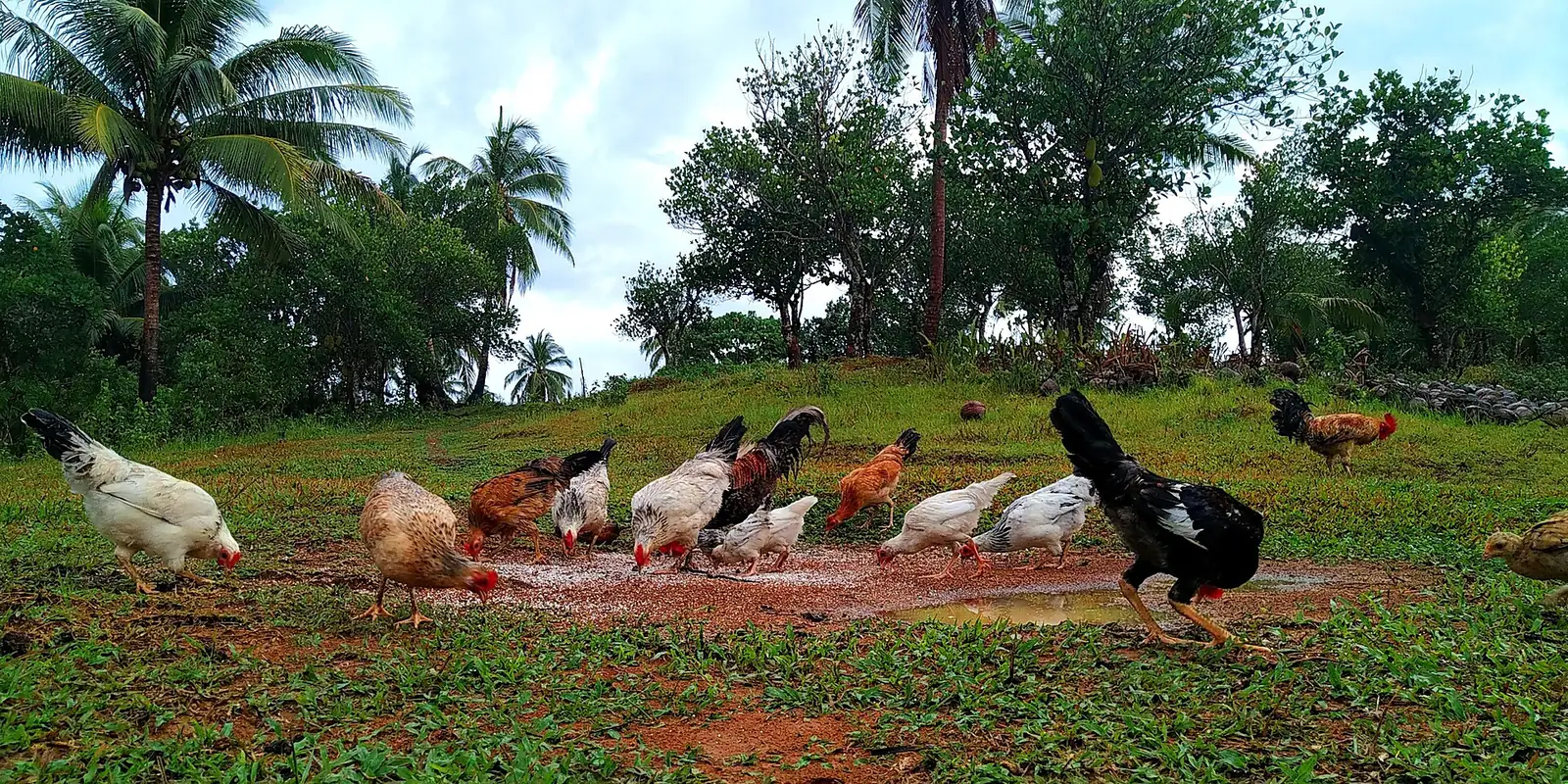
Native Philippine chickens. Photo: FroyAgta, CC BY-SA 4.0, via Wikimedia Commons

Your estimate for this batch
- Birds harvested
- 475 of 500
- Liveweight harvested
- 808 kg
- Feed per bird
- 2.72 kg
- Feed for the batch
- 1,326 kg · 26.5 bags of 50 kg
- Chicks
- ₱22,500
- Feed
- ₱50,388
- Brooding, health and other costs
- ₱9,000
- Total cost
- ₱81,888 · ₱172.40 per bird
- Sale value
- ₱100,938
- Return on cost
- 23.3%
- Floor space needed
- about 50 m²
- Batches a year
- 7 (a 46-day cycle)
- A year at this rate
- ₱133,347
What if things change?
| Price | Profit |
|---|---|
| ₱115.00 −10 | ₱10,975 |
| ₱120.00 −5 | ₱15,012 |
| ₱125.00 (yours) | ₱19,050 |
| ₱130.00 +5 | ₱23,087 |
| ₱135.00 +10 | ₱27,125 |
| Feed | Profit |
|---|---|
| ₱34.20 −10% | ₱24,088 |
| ₱38.00 (yours) | ₱19,050 |
| ₱41.80 +10% | ₱14,011 |
How we work it out
- Feed: sale weight × feed conversion = kg of feed per bird. Birds that are lost are counted as eating half of that. (Contract growers: the integrator supplies the feed, so it is not in your costs.)
- Total cost: chicks + feed × your feed price + brooding, health and other costs for every chick you started.
- Income and profit: birds harvested × sale weight × your price per kg liveweight, or birds harvested × your grower’s fee, minus the total cost.
- House and year: chicks ÷ birds per m² gives the floor space; 365 ÷ (days to harvest + cleaning days) gives the full batches a year.
An estimate only, made from the numbers you type: real growth, feed use, deaths, fees and prices vary with the chicks, feed, house, weather and disease. Bonuses and deductions in a growing contract (for feed conversion, weight or birds lost) are not included; work them out with your contract in hand. The cost of the house and equipment is not counted unless you add it under other costs. Check figures with your feed supplier, veterinarian or municipal agriculture office before you invest. Nothing you type is stored or sent anywhere. For pigs, use the hog raising calculator; for laying hens, the egg layer calculator.
Healthy birds, steady income
One sick batch or one hot afternoon can take the profit above. These everyday habits protect your birds and your neighbors' flocks - bayanihan starts at the poultry house door.
- Keep visitors out. Only the people who work the house go in, with house-only boots and clothes and a footbath at the door. Keep catchers’ crates and trucks clean and away from the house until harvest day.
- Keep wild birds and backyard chickens apart from your broilers: close gaps in nets and walls, and store feed where birds and rats cannot reach it.
- Vaccinate on schedule. Follow the vaccination program your veterinarian, hatchery or integrator gives you, and write down every dose.
- Report many sudden deaths at once to your municipal or city veterinarian or agriculture office. Bird flu (avian influenza) must be reported. Do not sell, eat or throw sick or dead birds into rivers; follow your vet’s advice on disposal.
- Beat the heat in tag-araw. Hot months are hard on broilers: give cool, clean water all the time, run fans or open curtains, feed in the cooler hours and do not overcrowd.
- Get ready for typhoons. Check the roof and curtains before the season, keep feed dry and off the floor, have a generator or a plan for power cuts, and think about insurance: ask the PCIC whether your birds can be covered.
General guidance only, not veterinary advice. Official information: the Bureau of Animal Industry (BAI), the Department of Agriculture and the Philippine Crop Insurance Corporation (PCIC). Find your local office in our farm help directory.
Thinking of contract growing?
Many Filipino broiler growers raise birds for a company (an integrator) that supplies the chicks, feed and medicines and pays a fee for every bird harvested. Before you sign or build:
- Read the whole contract and keep a signed copy. Know how the fee is worked out and which bonuses or deductions apply for feed conversion, weight and birds lost.
- Know who pays for what: power, water, litter, brooding heat, catching and the house repairs the company asks for.
- Ask how many batches a year are promised and what happens when chicks are late or a batch is skipped.
- Talk to other growers for the same company in your area, and to your municipal agriculture office or a lawyer if anything is unclear.
- Keep your own records for every batch: chicks placed, deaths each day, feed delivered, weights and payments. They help you check each settlement.
- Plan the money for the house. Ask government farm lenders such as the Landbank or the ACPC about farm loan programs; see our farm help directory.
Typhoon season?
Our free typhoon and flood farm checklist covers animals, feed, power and buildings, step by step.