

Rice Palay · Wet-season crop (tag-ulan)
The main crop on rainfed farms and many irrigated ones: planted when the habagat rains set in, harvested as the rains ease. Harvest often meets typhoons, so plan drying and storage early.
Palay calculator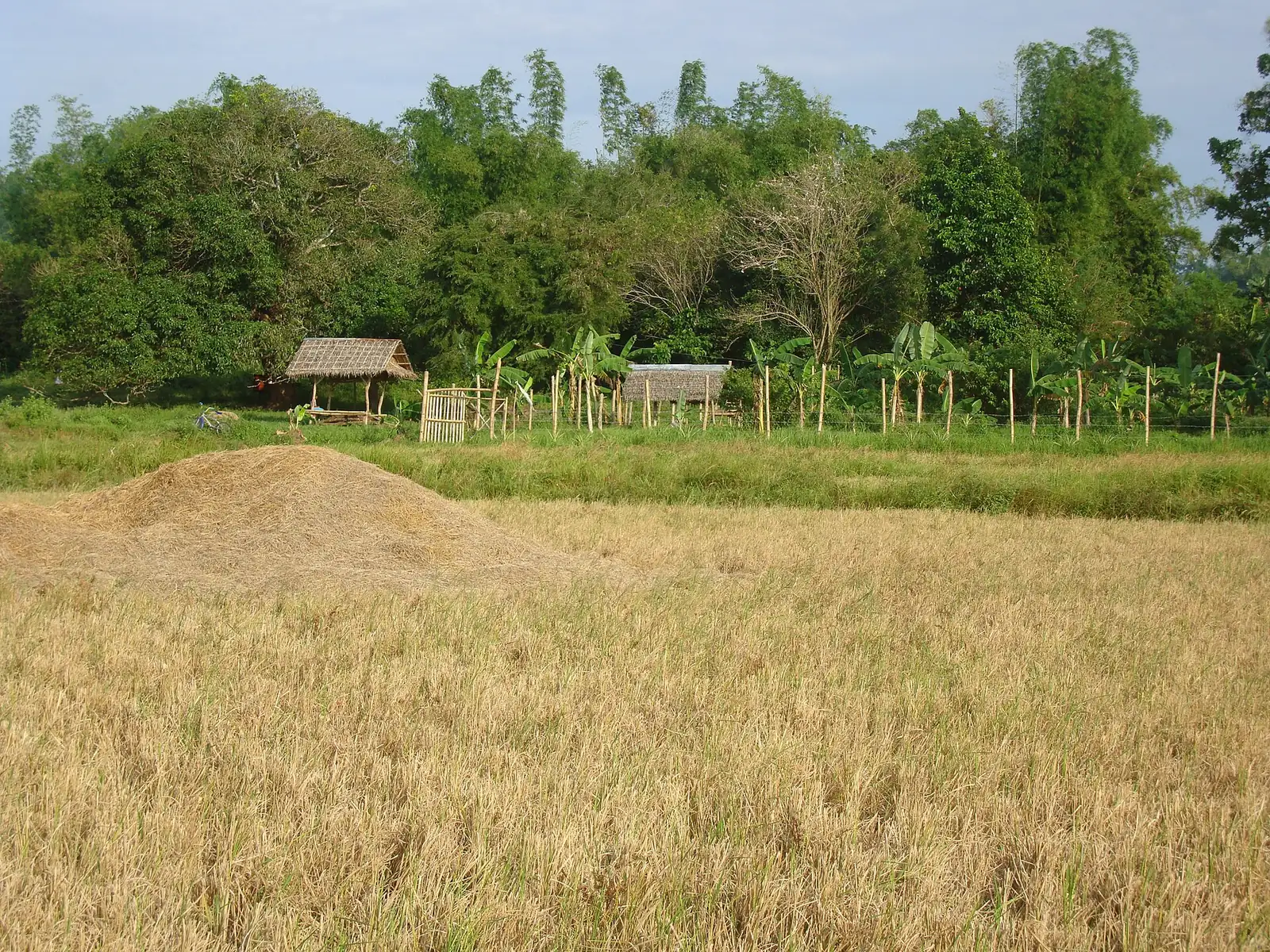
Kalendaryo ng pagtatanim
When the main crops are usually planted and harvested, month by month: pick your region, see what’s happening this month, and plan your own harvest around typhoon season.
Rice field in Merced, Banate, Iloilo. Photo: Dandy1022, CC BY-SA 4.0, via Wikimedia Commons
Kalendaryo ng pagtatanim means “planting calendar”. These are the typical national months. Your own dates depend on your climate, irrigation, variety and the year’s weather, so check with your municipal agriculture office and the PAGASA seasonal forecast.
Cordillera Administrative Region: Cooler highlands. Dry from about November to April, wet from about May to October; heavy rain brings landslide risk. Moderate typhoon exposure
More about your region in the regional farm guide.
October is in the usual typhoon season. Check PAGASA every day and keep our typhoon & flood farm checklist handy.
| Crop | Jan | Feb | Mar | Apr | May | Jun | Jul | Aug | Sep | Oct | Nov | Dec |
|---|---|---|---|---|---|---|---|---|---|---|---|---|
| Weather | Cool dry (amihan) | Cool dry (amihan) | Hot dry (tag-araw) | Hot dry (tag-araw) | Hot dry (tag-araw) | Rainy (tag-ulan, habagat) | Rainy (tag-ulan, habagat) | Rainy (tag-ulan, habagat) | Rainy + typhoon season | Rainy + typhoon season | Rainy + typhoon season | Cool dry (amihan) |
| Rice PalayWet-season crop (tag-ulan) | January: - | February: - | March: - | April: - | May: - | June: Planting | July: Planting | August: Growing | September: Growing, Harvest | October: Harvest | November: Harvest | December: - |
| Rice PalayDry-season crop (irrigated) | January: Planting, Growing | February: Growing | March: Growing, Harvest | April: Harvest | May: Harvest | June: - | July: - | August: - | September: - | October: - | November: Planting | December: Planting |
| Corn MaisFirst crop (wet season) | January: - | February: - | March: - | April: Planting | May: Planting | June: Planting, Growing | July: Growing, Harvest | August: Harvest | September: Harvest | October: - | November: - | December: - |
| Corn MaisSecond crop (late wet / dry season) | January: Growing, Harvest | February: Harvest | March: Harvest | April: - | May: - | June: - | July: - | August: - | September: - | October: Planting | November: Planting | December: Planting, Growing |
| Sugarcane TuboCrop year September to August | January: Planting, Harvest | February: Harvest | March: Harvest | April: Harvest | May: Harvest | June: Growing | July: Growing | August: Growing | September: Growing | October: Planting, Harvest | November: Planting, Harvest | December: Planting, Harvest |
| Coconut NiyogAll year | January: Harvest | February: Harvest | March: Harvest | April: Harvest | May: Harvest, Planting | June: Harvest, Planting | July: Harvest, Planting | August: Harvest | September: Harvest | October: Harvest | November: Harvest | December: Harvest |
| Mango (carabao) ManggaMain season | January: Key care job | February: Growing | March: Growing, Harvest | April: Harvest | May: Harvest | June: Harvest | July: - | August: - | September: - | October: Key care job | November: Key care job | December: Key care job |
| Banana SagingAll year | January: Harvest | February: Harvest | March: Harvest | April: Harvest | May: Harvest | June: Harvest | July: Harvest | August: Harvest | September: Harvest | October: Harvest | November: Harvest | December: Harvest |
| Onion SibuyasDry-season crop | January: Planting | February: Growing | March: Harvest | April: Harvest | May: - | June: - | July: - | August: - | September: - | October: - | November: Planting | December: Planting |
| Garlic BawangCool dry season | January: Growing | February: Harvest | March: Harvest | April: Harvest | May: - | June: - | July: - | August: - | September: - | October: Planting | November: Planting | December: Planting |
| Highland vegetables GulayAll year (Cordillera) | January: Planting, Harvest | February: Planting, Harvest | March: Planting, Harvest | April: Planting, Harvest | May: Planting, Harvest | June: Planting, Harvest | July: Planting, Harvest | August: Planting, Harvest | September: Planting, Harvest | October: Planting, Harvest | November: Planting, Harvest | December: Planting, Harvest |
On a phone, swipe the table sideways to see every month.
The main crop on rainfed farms and many irrigated ones: planted when the habagat rains set in, harvested as the rains ease. Harvest often meets typhoons, so plan drying and storage early.
Palay calculatorGrown where irrigation water lasts through the dry months. Often the higher-yielding crop thanks to more sunshine and fewer storms; watch for El Niño water advisories.
Palay calculatorPlanted with the first rains. Yellow corn goes mostly to animal feed; white corn is also eaten, especially in the Visayas and Mindanao.
Seeding ratePlanted on the last of the rains or after the wet-season harvest; needs soil moisture or irrigation to finish.
Seeding rateCutting and milling usually run from about October to May (the Sugar Regulatory Administration sets each crop year from September). New cane and ratoons are planted or tended right after cutting.
Nuts are picked all year, commonly every one and a half to two months. New seedlings are best planted at the start of the rains. Strong typhoons can set trees back for years.
Many growers induce flowering in the cool dry months; fruit is picked about March to June in much of Luzon and the Visayas. Mindanao and induced off-season orchards fruit at other times too.
Harvested all year. Big export plantations are mostly in Mindanao, where typhoons are less frequent; backyard saba is grown almost everywhere.
A dry-season crop after rice in Nueva Ecija, Pangasinan and Occidental Mindoro. Harvest before the rains and cure the bulbs well for storage.
Planted when the cool amihan months begin, notably in Ilocos Norte and Mindoro, and harvested in the dry months.
Cabbage, carrots, potatoes and lettuce are planted in turns all year in Benguet and nearby; the drier months are easier, and heavy rain brings disease and landslide risk to roads.
Pick your crop and planting date, and use the days to maturity printed on your seed bag or variety sheet. We show your likely harvest window and warn you if it falls in the usual typhoon months.
Likely harvest
Outside the usual typhoon months. Storms can still come at any time, so keep watching PAGASA.
A guide only: weather, variety and how you manage the crop all change the date. The calendar file is made on your device; nothing is sent to us.
This calendar is general information from REALM Group Philippines, not official advice.