
Wala pang salin sa Filipino ang pahinang ito, kaya nasa Ingles muna ito.
Pag-aalaga ng baboy
Hog raising cost & profit calculator
Before you buy your next batch of biik: what the feed, piglets and care will cost, what the pigs should bring at your price per kilo, your profit per head and the break-even price.
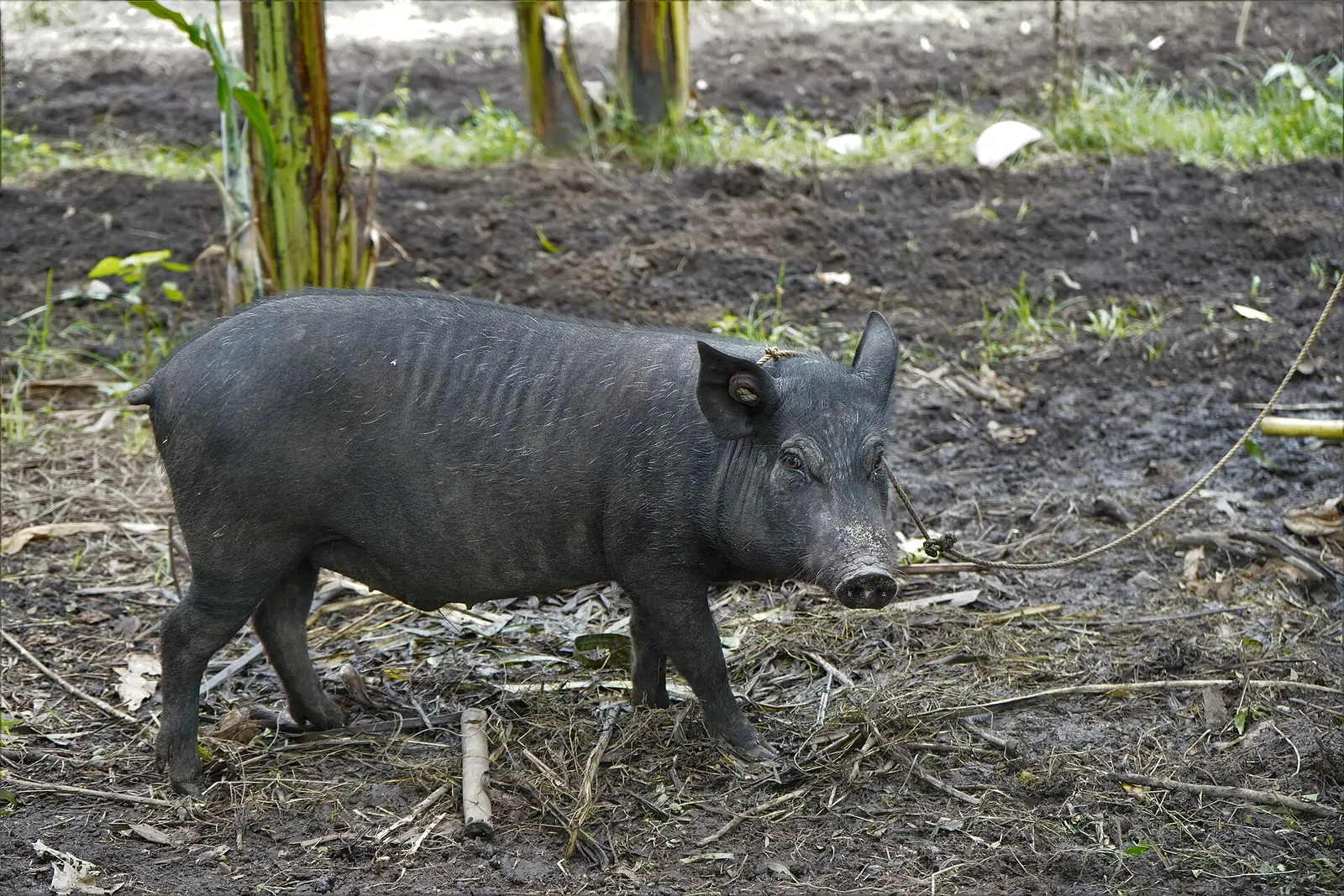
Native pig in a backyard. Photo: Zyrahila, CC BY-SA 4.0, via Wikimedia Commons

Your estimate for this batch
- Pigs sold
- 9.7 of 10
- Days to market
- about 123 days (4.0 months)
- Feed per pig
- 224 kg
- Feed for the batch
- 2,206 kg · 44.1 bags of 50 kg
- Piglets
- ₱45,000
- Feed
- ₱77,224
- Health and other costs
- ₱8,000
- Total cost
- ₱130,224 · ₱13,425 per pig sold
- Liveweight sold
- 970 kg
- Sale value
- ₱174,600
- Return on cost
- 34.1%
What if the price changes?
| Price | Profit |
|---|---|
| ₱160.00 −20 | ₱24,976 |
| ₱170.00 −10 | ₱34,676 |
| ₱180.00 (yours) | ₱44,376 |
| ₱190.00 +10 | ₱54,076 |
| ₱200.00 +20 | ₱63,776 |
| Feed | Profit |
|---|---|
| ₱31.50 −10% | ₱52,098 |
| ₱35.00 (yours) | ₱44,376 |
| ₱38.50 +10% | ₱36,654 |
How we work it out
- Feed: (sale weight − start weight) × feed conversion = kg of feed per pig. Pigs that are lost are counted as eating half of that.
- Total cost: piglets + feed × your feed price + health and other costs for every pig you started.
- Sale value and profit: pigs sold × sale weight × your price per kg liveweight, minus the total cost. Return on cost = profit ÷ total cost.
- Break-even and days: total cost ÷ kg liveweight sold is the lowest price that covers your costs; weight to gain ÷ daily gain gives the days to market.
An estimate only, made from the numbers you type: real growth, feed use, deaths and prices vary with breed, feed, housing, weather and disease. Your own labor and the cost of pens and equipment are not counted unless you add them under other costs. Check figures with your feed supplier, veterinarian or municipal agriculture office before you invest. Nothing you type is stored or sent anywhere. To value pigs you already have, use the livestock sale value calculator; for sows due to farrow, the due date calculator.
Keep ASF out: biosecurity for every farm
African swine fever (ASF) does not make people sick, but it kills pigs and there is no cure. A single outbreak can wipe out the profit above. These everyday habits help protect your pigs and your neighbors' pigs - bayanihan starts at the pen gate.
- Buy healthy biik from a known source. Pigs moved between provinces need a shipping permit and a veterinary health certificate; ask to see them.
- Keep new pigs apart from your herd for the time your veterinarian advises before mixing them.
- No kitchen leftovers with pork (no "swill" or kaning baboy with meat). The virus can survive in pork, ham and sausages.
- Limit visitors. Keep traders, their trucks and crates away from the pens; use a footbath and pen-only boots and clothes.
- Report sick or dead pigs at once to your municipal or city veterinarian or agriculture office. Do not sell, butcher or dump them in rivers.
- Ask about vaccination rules and insurance: your veterinarian or the BAI can tell you what applies in your area; PCIC offers livestock insurance.
General guidance only, not veterinary advice. Official information: the Bureau of Animal Industry (BAI), the Department of Agriculture and the Philippine Crop Insurance Corporation (PCIC). Find your local office in our farm help directory.
Typhoon season?
Move pigs to higher ground early and store feed above flood level: our free typhoon and flood farm checklist covers animals, feed and pens.